
If you’ve been hearing about vibroacoustic therapy chairs and wondering what all the buzz (literally) is about, you’re not alone. These chairs aren’t your typical massage recliners with a bit of shaking and heating. They’ve got a whole different vibe — and it all comes down to how they use sound.
Now, here’s the big question people ask all the time: Do vibroacoustic chairs actually use sound waves, or is it just regular vibration pretending to be something fancy? Spoiler alert: it’s both — but not in the way you might expect.
Sound You Can Feel — Not Just Hear
First things first: vibroacoustic therapy is based on low-frequency sound waves. We’re talking deep, rumbly tones — think bass levels, like the kind that makes your chest vibrate at a concert.
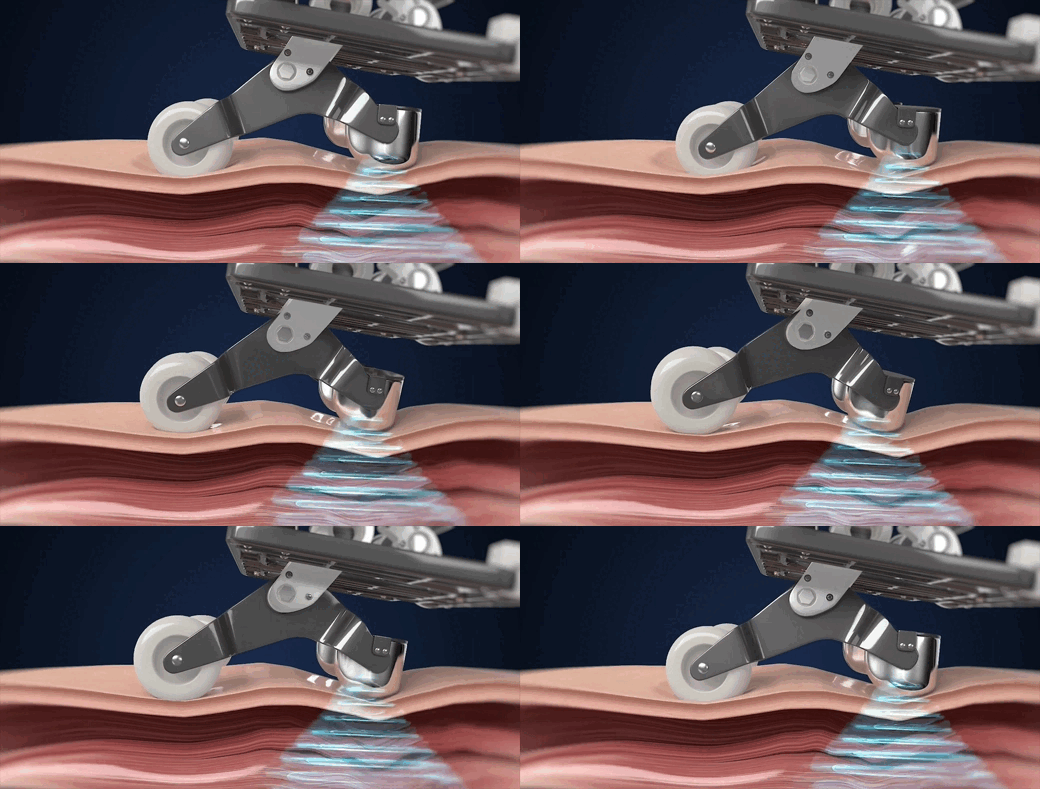
These aren’t just random vibrations like those buzzy seats you see in old-school massage chairs. In a vibroacoustic chair, the vibrations you feel are coming directly from sound waves. Actual audio signals are sent to special parts inside the chair, like embedded speakers or transducers, and those turn the sound into physical vibration. Cool, right?
So yes, these chairs absolutely use real sound waves — and not just to create noise, but to generate a physical response in your body.
How It Works (Without Getting Too Nerdy)
Alright, here’s the basic idea:
- The chair has low-frequency speakers or transducers built into it — usually in the seat, backrest, and sometimes the leg area.
- You play specific audio through the chair — this can be specially designed therapeutic tracks or even just music with a good low-end range.
- As the sound plays, the speakers vibrate in sync with those low frequencies, and those vibrations move through your body.
- Your muscles, bones, and even your nervous system respond to the rhythm and pulse of the sound.
You’re not just listening to music. You’re absorbing it — literally.
Not All Vibrations Are Created Equal
Here’s where it gets interesting. A lot of regular massage chairs do vibrate, but that’s usually from mechanical parts — like little motors spinning to create a basic shake. That kind of vibration isn’t bad, but it’s kind of… random. It doesn’t connect to your brain in the same way.
Vibroacoustic vibrations are different. They’re precise. They’re in harmony with actual audio frequencies. That matters because your body naturally responds to different sound frequencies in different ways.
For example:
- 30-40 Hz can help relax tight muscles.
- 50-60 Hz may stimulate circulation.
- 70-80 Hz might be more energizing and alerting.
So, depending on the track and how the chair is set up, you can actually tune your body with sound. That’s the real beauty of vibroacoustic therapy — it’s not just noise or shaking. It’s a targeted, physical experience with real wellness potential.
Does It Feel Like a Massage?
Kinda, but not exactly. Don’t expect kneading rollers or shiatsu fingers poking your spine. The sensation is more of a deep pulse or wave, almost like being gently rocked or humming from the inside out.
Some people describe it like this:
“Like my whole body was a speaker.”
“Like the music was massaging my cells.”
“Like floating in sound.”
Weird descriptions? Maybe. Accurate? Definitely.
If you’ve never felt it before, it can take a few minutes to adjust. But once your body settles in, it’s incredibly calming — even meditative. Some folks even fall asleep mid-session.
Are You Just Sitting on a Giant Subwoofer?
Not quite. While there is a subwoofer-like element to it, the design of a vibroacoustic chair is way more sophisticated. It’s built to channel vibrations in specific directions, matching the contours of your body.
It’s not about cranking the bass and hoping for the best. It’s about targeting specific zones — like your lower back, legs, or chest — with finely tuned sound-based stimulation.
And since it’s all based on real audio signals, you can adjust things easily. Want a more relaxing session? Choose slower, deeper frequencies. Need a midday reboot? Try a more rhythmic track with moderate frequencies. Some chairs even come with built-in sound therapy playlists designed by therapists.
Music, Tones, or Guided Sessions?
All of the above. Most modern vibroacoustic chairs support:
- Ambient soundscapes with gentle frequencies.
- Brainwave entrainment tones for focus or sleep.
- Guided meditation audio that combines voice, music, and vibration.
- Even your own playlist, as long as it has decent bass response.
What you choose to play can seriously impact how your body and mind respond to the session. So while you can throw on some mellow jazz or lo-fi beats, you’ll get more out of it with tracks made for vibroacoustic therapy.
Is It Sound or Is It Vibration?
It’s both. But not in a cheap, gimmicky way. Vibroacoustic chairs take real sound waves, especially low-frequency ones, and convert them into targeted therapeutic vibrations. You’re not just hearing the music — you’re physically feeling it, and that’s where the magic is.
Think of it like this:
Regular chairs give you a massage.
Vibroacoustic chairs give you an experience — one that works from the inside out.
Should You Try One?
If you’re into relaxation, meditation, recovery, or even just want a unique way to unwind after work, vibroacoustic therapy chair is 100% worth checking out. It’s not just a trend — it taps into how your body naturally reacts to sound, and it feels really good when done right.
Just be warned: once you’ve had a session in one of these chairs, regular massage chairs might feel kind of… silent.